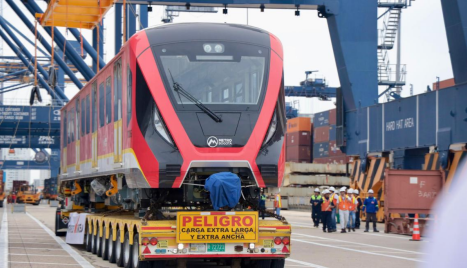
On September 2, the first train for Bogota Metro Line 1, named Gaby, arrived at the Port of Cartagena after shipping from China. Built by China Communications Construction Company, the project marks Bogota’s first metro line and is the largest public-private partnership metro project in Latin America, fulfilling an 80-year dream for the Colombian capital.

On November 20, the revitalization project for the Tanzania-Zambia Railway (TAZARA), constructed by China Railway Construction Corporation Limited (CRCC), officially commenced.

On February 18, during the Chinese Lunar New Year, China Chengtong Holdings Group Ltd. (China Chengtong) donated customized wooden toys, including a rocking horse and seating equipment, to Katyusha, a panda cub at the Moscow Zoo.
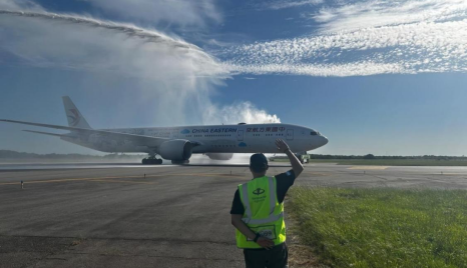
On December 4, China Eastern Airlines Holding Co., Ltd. launched the world’s longest one-way commercial flight, connecting China’s Shanghai with Argentina’s capital Buenos Aires via a stopover in Auckland, New Zealand.
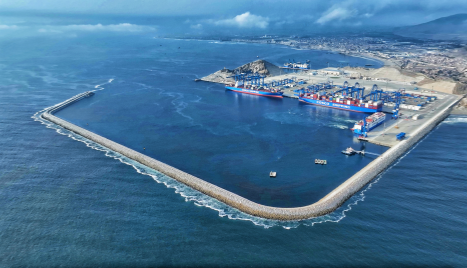
On November 14, Peru’s Chancay Port marked its first anniversary of operation. Peru's customs data show that in the first nine months of the year, the port handled exports worth 603 million dollars (4.24 billion yuan) and imports worth 984 million dollars, significantly boosting regional economic growth.

On November 11, the Simandou Iron Ore Project—one of the world’s largest and highest-quality mining projects—was officially commissioned at Port Moribaya in Guinea.

On November 7, the eastern section of the 2Africa subsea cable system—jointly developed by China Mobile Communications Group Co., Ltd. and its partners—was officially put into service. Stretching approximately 45,000 kilometers with a design capacity of up to 180 Tbps, the world’s largest subsea cable system connects 33 countries and regions across Africa, the Middle East, Asia and Europe, benefiting nearly three billion people.
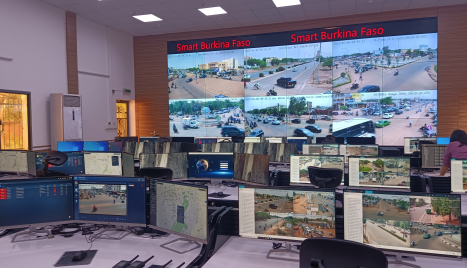
On August 15, China Telecom Corporation Limited completed the Smart Burkina Faso project, connecting 22 major cities across the West African country to high-speed information networks. Benefiting around five million people, the project has enhanced government governance and public services while making communication faster, services more accessible and cities safer.