Doubling down on green transformation, the Bayan Oilfield operated by China National Petroleum Corporation (CNPC) in Bayannuur, a city in Inner Mongolia Autonomous Region, has explored an all-embracing development model that integrates oil extraction, professional services and low-carbon efforts to build itself into an intelligent, comprehensive energy base.
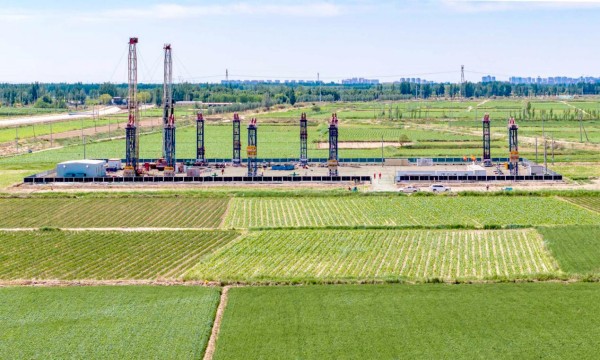
The Bayan Oilfield is operated by China National Petroleum Corporation (CNPC). [Photo/sasac.gov.cn]
The Xinghua experimental plot of the oilfield was put into large-scale operation to test whether carbon capture, utilization and storage technology is compatible with oil extraction. So far, more than 200,000 metric tons of carbon dioxide have been injected underground to enhance oil recovery, achieving an efficiency that is 20 percent higher than the conventional water injection method.
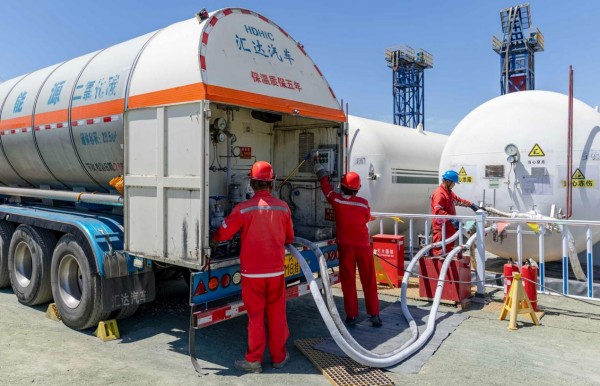
Workers inject carbon dioxide into storage tanks. [Photo/sasac.gov.cn]
The oilfield has strictly carried out the land rehabilitation policy, which requires equal areas of restoration to appropriated land. In addition, it promoted the electrification of oil-fueled equipment and used electricity to power drilling machines, reducing fuel expenditure by 4.8 million yuan ($709,003) annually while cutting carbon emissions and noise.
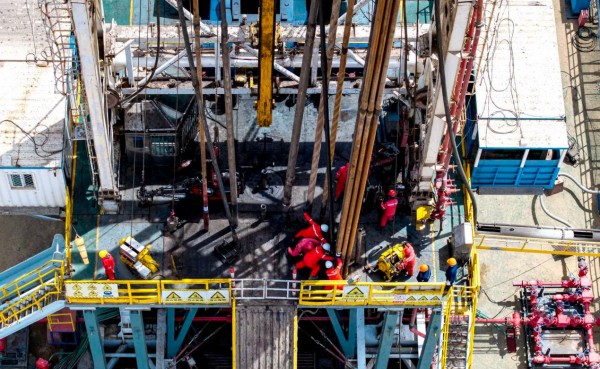
A view of electrification engineering. [Photo/sasac.gov.cn]
At the Bayan Oilfield also stands CNPC’s first large-scale smart station utilizing an optical fiber communication system. The optical fiber neural network replaces traditional copper-core cables, tripling the signal transmission rate and significantly enhancing anti-interference performance.
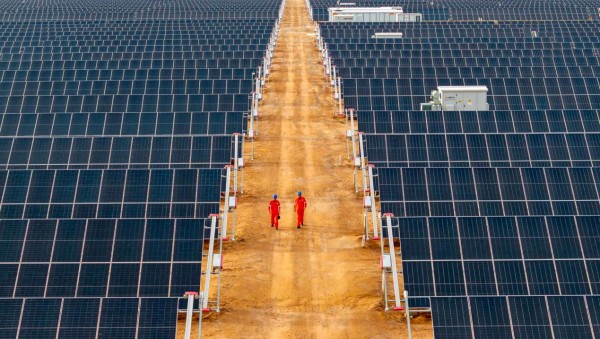
Two workers walk through a solar farm. [Photo/sasac.gov.cn]
The cluster pumping unit at the oilfield adopts an intelligent centralized device to achieve intensive management. Drones, inspection robots and an artificial intelligence fault diagnosis system are employed to transmit data to a central control room, enabling unmanned monitoring of the wells and reducing the need for manpower to inspect other facilities.
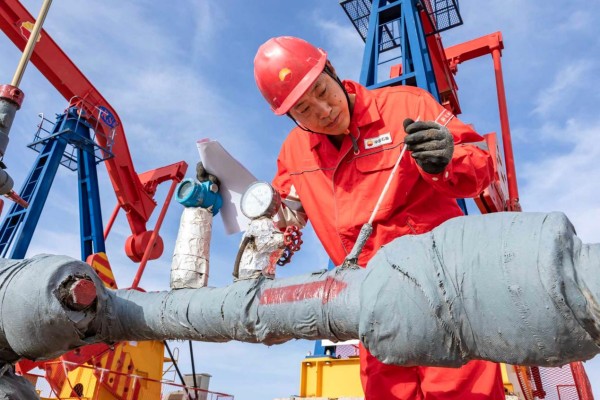
A worker checks equipment at the Bayan Oilfield’s crude oil transfer station. There are two freight trains scheduled daily, carrying about 5,600 tons of crude oil in total. [Photo/sasac.gov.cn]
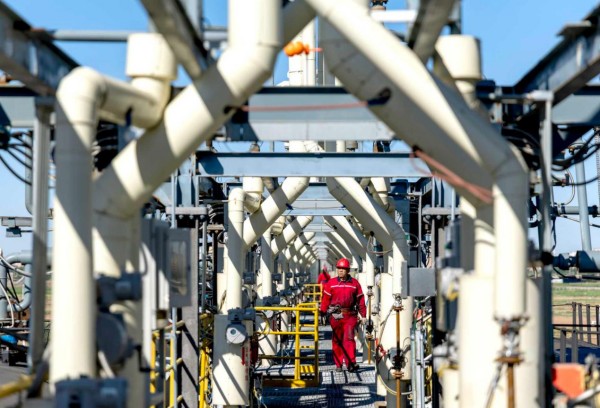
Staff members inspect the loading arms to check the oil loading situation. [Photo/sasac.gov.cn]
(Executive editor: Zuo Shihan)