The Nam Phay Hydropower Station in Laos has cumulatively generated more than 3.5 billion kilowatt-hours of electricity.
The power station was developed by Northern International Group, a subsidiary of China North Industries Group Corporation Limited, under a Build-Operate-Transfer (BOT) model, the first overseas BOT project undertaken by the group.
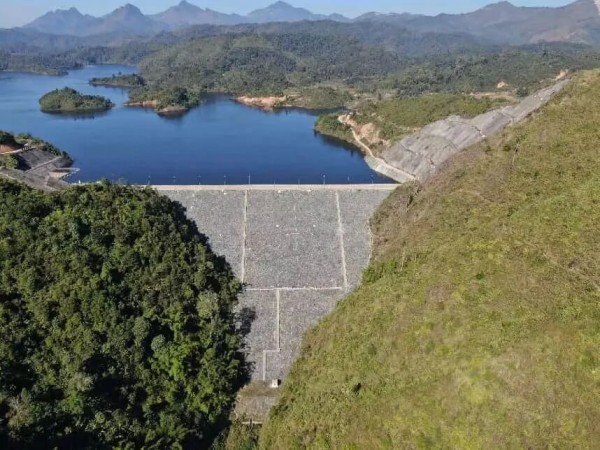
A view of Laos’ Nam Phay Hydropower Station. [Photo/sasac.gov.cn]
The Nam Phay Hydropower Station is located in the upstream valley of the Nam Phay River, a secondary tributary of the Mekong River. With two power generating units, its total installed capacity is 86 megawatts, and it can generate an average of 417 million kilowatt-hours of electricity annually. It is a key project supporting Laos' strategy to become the "Battery of Southeast Asia". The station supplies electricity to high-demand areas in central and northern Laos, including the country’s capital Vientiane and Xaisomboun Province. The region is traversed by the China-Laos Railway and is also one of the country's major mining hubs, making it an important engine of Laos' economic development.
Since it started operation in 2017, the power station has continuously supplied Laos with green electricity amid its industrial upgrading and urban and rural development. It has reduced about 3.45 million metric tons of carbon dioxide emissions, thereby supporting Laos in establishing a green, sustainable energy system.
From the beginning when its construction started, the power station has remained committed to fulfilling its social responsibilities. It has built resettlement communities for relocated residents, along with supporting facilities, such as medical clinics, marketplaces and primary and middle schools. They also conduct regular monitoring of reservoir water quality and set up a dedicated fund to boost local economic and social development.
At the same time, the project team has cultivated a large number of local technicians in hydropower plant operation and maintenance through a mentoring program pairing Chinese and Lao employees. Currently, 70 percent of the power station’s employees are Laotians, resulting in a rise in the local employment rate and residents’ incomes.
(Executive editor: Zuo Shihan)