Typhoon Maysak bore down on southern China, bringing heavy rainstorms, particularly to the central and southern parts of the Guangxi Zhuang Autonomous Region and western Guangdong Province.
China Energy Investment Corporation Co., Ltd. (CHN Energy) immediately activated its emergency response to the typhoon and floods and made every effort to ensure a safe, secure, and stable regional energy supply.
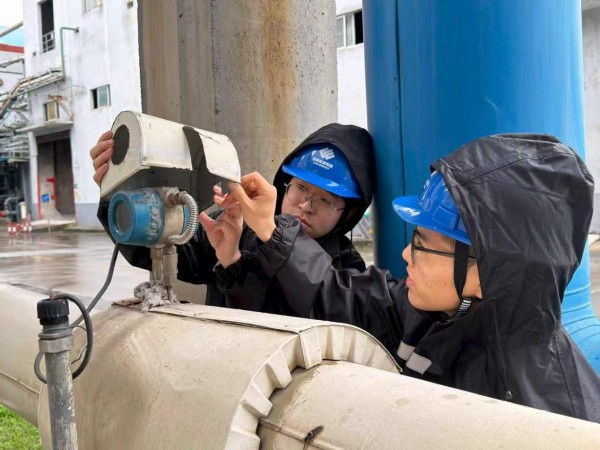
Maintainers in the Guangxi Zhuang Autonomous Region examine the devices. [Photo/sasac.gov.cn]
The corporation’s Guangxi subsidiary promptly issued a Level-3 warning for major meteorological disasters (typhoons) and swiftly troubleshot potential dangers. It set in motion a thorough examination of pivotal equipment, such as backup power supply devices, drainage pumps and outdoor heavy machinery.
The company’s branch in Nanning, the capital of Guangxi, owns the only thermal power production base in Hengzhou, a county-level city under the administration of Nanning. When the city’s Liulan Reservoir was nearing a breach, the company arranged flood-preventing equipment like life jackets and diesel-powered fire pumps and worked closely with the local emergency response government agencies.
Remarkably, the four thermal power units of CHN Energy’s Guangxi subsidiary, located in Beihai, Nanning, Liuzhou cities and Yongfu county, maintained safe and stable operations despite the typhoon’s impact.
Other CHN Energy subsidiaries also used their professional advantages to assist with disaster relief. They strengthened inspection of equipment and sites and stocked up on protective necessities, ensuring a reliable energy supply.
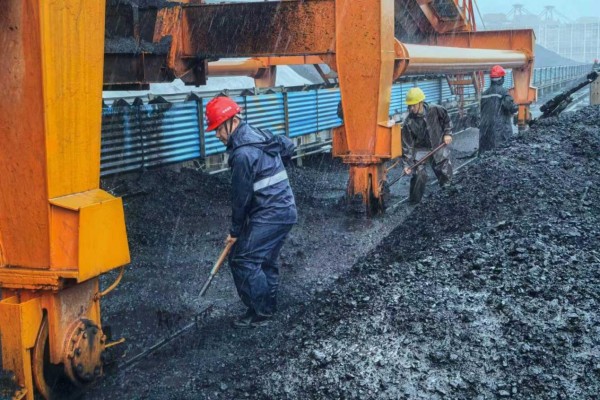
Workers in Guangdong Province shovel coal amid rain. [Photo/sasac.gov.cn]
CHN Energy continuously provided support for disaster relief and power supply in Guangxi and its neighboring regions. As a central state-owned enterprise, it made every effort to safeguard people’s safety, keep devices operating stably and maintain the regional energy supply.
(Executive editor: Zuo Shihan)