Construction of the ±800 kilovolt ultra-high-voltage direct-current electricity transmission project in northeastern Brazil began on June 24.
The UHVDC electricity transmission project is solely invested, built and operated by State Grid Brazil Holding S.A., a subsidiary of State Grid Corporation of China (State Grid). Franchised by the Brazilian government, it is the third UHV electricity transmission project that State Grid has undertaken abroad -- the previous two are phases Ⅰ and Ⅱ of the Belo Monte electricity transmission project, also in Brazil. The new project represents the largest ever investment in a franchised electricity transmission project in Brazil.
State Grid won the bid for the project in December 2023 and signed a franchise contract in April 2024. In June, it was authorized to start the all-around construction. The electricity transmission project is expected to begin operating in 2029 for a 30-year franchise period.
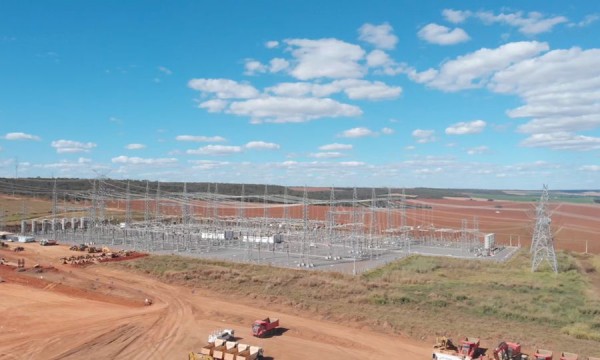
The Silvania Converter Substation is capable of receiving and converting the electricity transmitted via the project. [Photo/sasac.gov.cn]
The UHVDC electricity transmission project has a 1,468-kilometer transmission line using advanced Chinese technology, with converter substations ready to be constructed on both ends of the line, and other supporting facilities. The line has a rated transmission capacity of 5 gigawatts, crossing four Brazilian states, namely Maranhao, Tocantins, Goias and Minas Gerais.
Once operational, the project will enable the delivery of the huge amount of electricity generated by the rich wind and photovoltaic power in Northeast Brazil. The electricity will power the urban cluster with Brasilia, the capital of the country, at its core. Through this, Brazil can optimize its energy allocation, speedily transform its energy structure and achieve sustainable economic and social development.
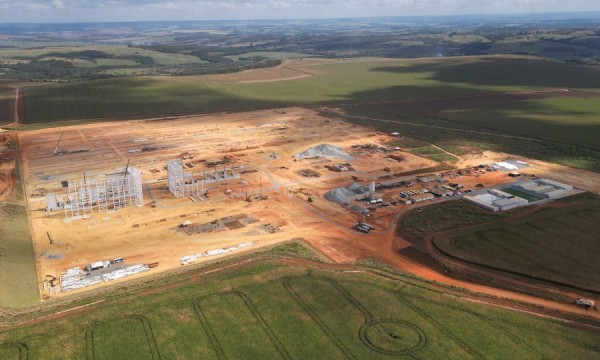
The construction of supporting infrastructure for the Silvania Converter Substation is underway. [Photo/sasac.gov.cn]
The project will also benefit people’s livelihoods and the eco-environment. Once operational, it can collect the clean electricity generated from wind, solar and hydro power in Northeast and North Brazil, and directly transmit it to the country’s central and eastern areas, where approximately 12 million residents in cities like Brasilia are in urgent need of the supply. It will facilitate the consumption of over 20 billion kilowatt-hours of clean electricity annually, equivalent to reducing 6.84 million metric tons of carbon dioxide emissions.
As planned, the project will bypass important natural conservation areas, such as the Jalapao State Park and the Central Plateau Environmental Protection Area, and ecologically fragile regions. With refined construction techniques, an additional 42.9 hectares of wild vegetation will be preserved, which otherwise would have had to be removed to clear the pathway. To compensate for the trees that inevitably must be felled, the construction team is expected to set up an estimated 953-hectare off-site reforestation project to minimize the impact on the local environment.
During the construction, the project is expected to directly create over 30,000 jobs for local residents, promoting industrial upgrades, improving people’s living standards and achieving balanced regional development along its route.
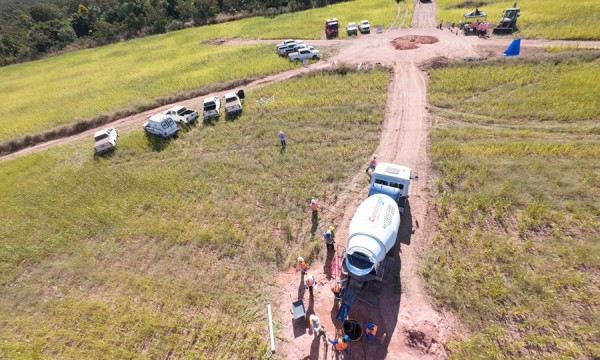
Construction commences on the ultra-high-voltage direct-current electricity transmission project. [Photo/sasac.gov.cn]
State Grid will fully leverage its technical and management advantages to ensure a safe, technically advanced, environmentally friendly and world-class construction. The corporation will strictly ensure construction quality and efficiency, contributing to China-Brazil energy collaboration.
(Executive editor: Zuo Shihan)