The Nam Ngum 3 Hydropower Station, an EPC (engineering, procurement, and construction) project undertaken by Power Construction Corporation of China, has commenced reservoir impoundment, laying a solid foundation for the subsequent power generation.
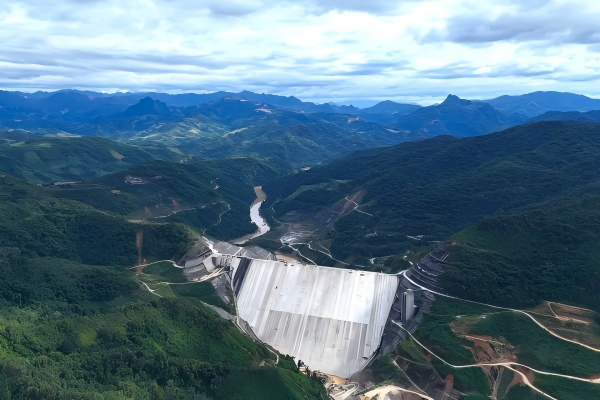
The Nam Ngum 3 Hydropower Station in Xaisomboun Province in central Laos commences reservoir impoundment. [Photo/sasac.gov.cn]
The facility, located in Xaisomboun Province in central Laos, is the third of five cascade hydropower stations on the Nam Ngum River. It is a crucial project of the country’s energy plan, a landmark under the China-Laos high-quality Belt and Road cooperation, and a model of Lancang-Mekong Cooperation.
The hydropower station has a total installed capacity of 480 megawatts, equipped with three 160-megawatt hydroelectric units. Designed primarily for power generation, the project also offers additional value in aquaculture and tourism. It consists of a river-blocking dam, spillways and a hydroelectric system. The 210-meter-tall concrete face rockfill dam is the tallest dam ever built or under construction in Laos.
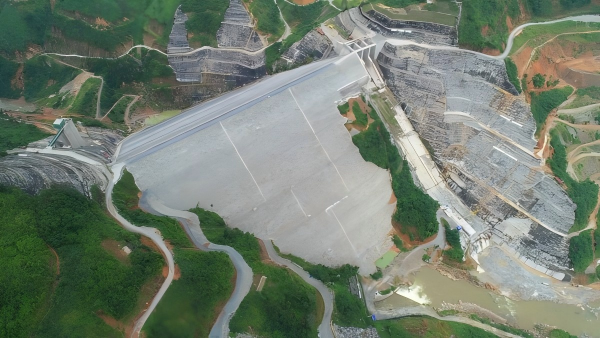
The Nam Ngum 3 Hydropower Station in Xaisomboun Province in central Laos commences reservoir impoundment. [Photo/sasac.gov.cn]
The project team has tackled a series of complex geological and technical challenges. All pre-impoundment survey, design and acceptance tasks were delivered with high efficiency. Despite a tight schedule and floods, the team ensured the dam met all impoundment eligibility requirements, allowing the reservoir impoundment to be carried out safely, smoothly and on schedule.
Once operational, the hydropower station is expected to supply 2.345 billion kilowatt-hours of clean electricity annually to Laos. The project will significantly enhance the country’s power supply capacity and grid stability, while providing sustained momentum for energy mix optimization and long-term economic and social development. It also stands as a tangible outcome of China-Laos pragmatic cooperation in the energy sector.
(Executive editor: Zuo Shihan)