“In recent years, China has upgraded its construction industry and cultivated more strategic emerging industries. We’ve built the shield tunneling machine and the world’s first smart high-speed railway that can run at 350 kilometers per hour, and we’ve transformed the Boao Zero-Carbon Demonstration Zone, offering China’s solution to the global zero carbon standards,” said Dai Hegen, chairman of the board and secretary of the Party committee of China Railway Construction Corporation Limited.
“But we still face challenges and problems as we deepen integration between technological and industrial innovation and forge ahead with the high-quality industrial development,” Dai added.
Dai, also a member of the National Committee of the Chinese People’s Political Consultative Conference, focused on the deep integration between technological and industrial innovation and prepared proposals to create new growth drivers for the construction industry.
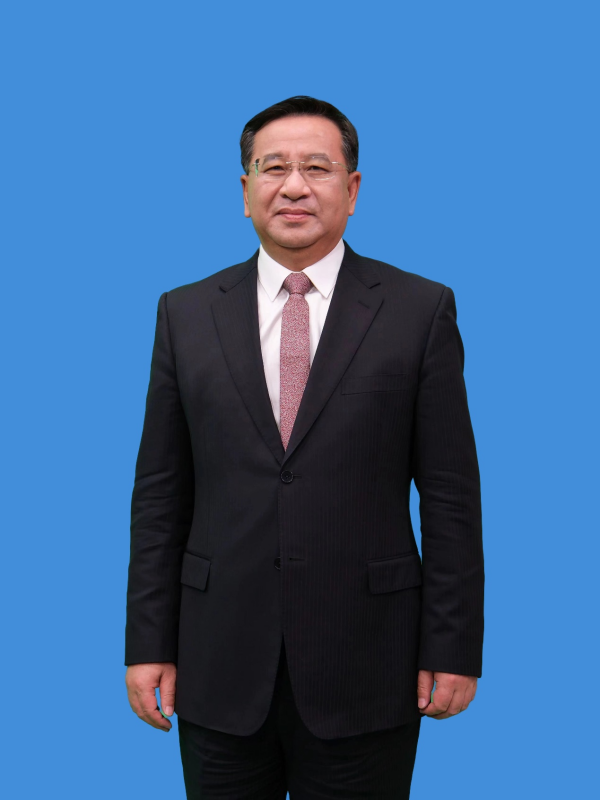
Dai Hegen, chairman of the board and secretary of the Party committee of China Railway Construction Corporation Limited, is a member of the National Committee of the Chinese People’s Political Consultative Conference. [Photo/sasac.gov.cn]
Dai noted that China’s construction industry is currently going through a key transformation phase from large-scale expansion to the high-quality development. He emphasized that the new development pattern, which is led by technological innovation and supported by industrial upgrading, is imperative for the high-quality development of the construction industry and the implementation of national major strategies.
To deepen the integration between technological and industrial innovation in the construction industry, Dai suggested stepping up efforts to make breakthroughs in key generic technologies to strengthen the technological foundation for developing new quality productive forces within the industry. He also proposed establishing a mechanism that brings together scientists, entrepreneurs and engineers to identify major scientific questions that arise in industrial innovation and to promote technological breakthroughs through a demand-driven approach. He called for strengthening the role of enterprises as the main drivers of technological innovation and building a multitiered, collaborative innovation ecosystem. He underscored improving the layout of national strategic scientific and technological forces by encouraging national laboratories and research institutes to establish joint laboratories and pilot bases with enterprises, thereby channeling more innovation resources to enterprises.
Dai also called for improving the “pilot-scale testing and technology maturation + scenario-based validation” mechanism to bridge the “last mile” toward commercialization of technological outcomes. He underscored that regional pilot-scale testing platforms and proof-of-concept centers could help mature technologies.
He called for establishing new production relations suitable for the cultivation of new quality productive forces and improving institutional arrangements and the supporting system for key production factors. He stressed creating a new financial support mechanism, where leading enterprises are encouraged to launch investment funds and technology commercialization funds, while accelerating the development of venture capital, technology insurance, and intellectual property pledge financing. These measures will help establish a financial service system that can support the entire circle of technological innovation, he added.
(Executive editor: Yuan Ting)