CPFL Energia, a Brazilian subsidiary of State Grid Corporation of China, has hosted the opening ceremony of the 10th Brazil-China Cultural Bridge in Campinas of Sao Paulo State, Brazil.
Representatives of the Chinese Consulate General in São Paulo, the Campinas government, Chinese-funded enterprises and the local Chinese community, as well as friendly people from all walks of Brazilian society, attended the event.
Landmark cultural achievements were unveiled at the opening ceremony. A light-and-shadow exhibition showed the landscape of the Great Wall via three-dimensional models and dynamic lighting effects. The Olodum Samba Group of Brazil staged a youth-themed performance. CPFL Energia and the University of Campinas debuted the Understanding China: Contemporary Academic Translation Series, a collection of Chinese philosophical works that they had jointly translated and compiled.
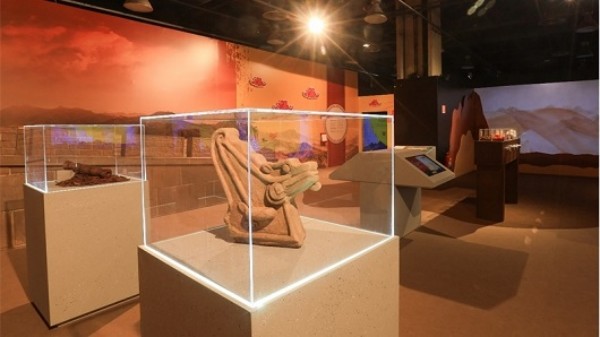
A light-and-shadow exhibition shows the landscape of the Great Wall via three-dimensional models and dynamic lighting effects. [Photo/sasac.gov.cn]
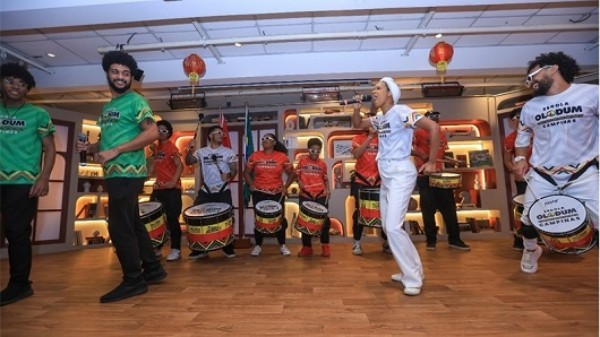
The Olodum Samba Group of Brazil stages a youth-themed performance. [Photo/sasac.gov.cn]
Running from September through December, the Brazil-China Cultural Bridge will be completely open and free to the public. The Philosophy Cafe, a program co-produced by CPFL Energia and a local Brazilian TV station, will be launched, featuring a series of lectures themed on contemporary Chinese philosophical thought. The China National Theatre for Children will perform its play The Snipe, the Clam and the Fish in Campinas, conveying Eastern philosophical wisdom through the children’s perspective.
The Brazil-China Cultural Bridge covers various fields, such as history, philosophy, literature and contemporary social development. It aims to go beyond one-way cultural display and seeks to spark public curiosity, so as to foster equal, two-way dialogues between civilizations and bring the Brazilian people closer to China.
Since its launch in 2018, the Brazil-China Cultural Bridge has been closely connected with grassroots communities, delivering cultural shows, academic exchanges and public welfare services. It has grown into a key platform for people-to-people exchanges and mutual learning between the Chinese and Brazilian people, benefiting hundreds of thousands of residents.
(Executive editor: Zuo Shihan)