The world’s first 16-megawatt tension-leg platform (TLP) floating wind power unit, “Haiyou Anlan”, commenced operations on August 6.
The platform, which has 126-meter-long wind turbine blades, is firmly anchored by nine steel tendons measuring over 100 meters long beneath the sea surface. The clean power generated offshore is to be transmitted to the Lufeng Oilfield in the Eastern South China Sea via submarine cables.
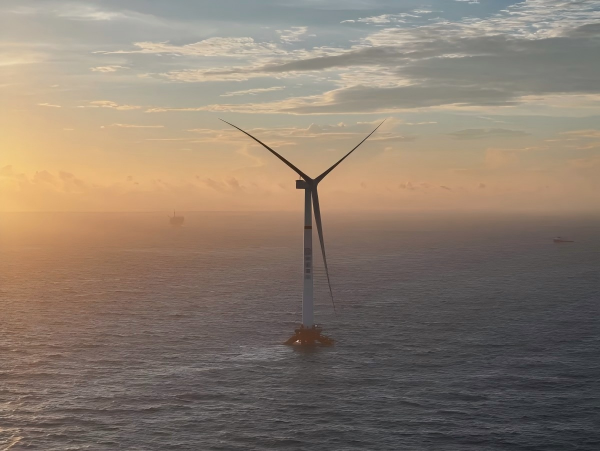
A view of the operational wind power unit. [Photo/sasac.gov.cn]
The platform sets global records for the deepest operating water depth, furthest offshore distance and largest single-unit capacity of any TLP floating wind platform. It is located 136 kilometers offshore in waters 136 meters deep, standing nearly as tall as a 110-storey building and weighing 7,800 metric tons.
Previously, China’s deep-sea floating wind projects adopted semi-submersible platforms that float on the ocean like vessels. In contrast, the TLP is held firmly in place by the powerful tension created between the upward buoyancy of the floating platform and the downward pull of the nine steel tendons anchored to the seabed. Thanks to this structural design, the platform’s tilt is kept to no more than 1 degree when battered by a Category-17 typhoon.
The waters where the platform operates are subject to frequent typhoons and other challenging sea conditions where its steel tendons must withstand enormous tensile forces, presenting immense challenges to the platform’s design and construction. Against this background, the platform operator China National Offshore Oil Corporation independently developed a high-strength mooring system and high-precision anchor connection technique. It also pioneered a collaborative construction method integrating key equipment and conducted dynamic construction monitoring through a three-dimensional marine condition simulation system. These innovations enabled millimeter-level subsea alignment and helped fill several gaps in the installation technologies for TLPs in China.
Once operational, the platform is expected to supply 54 million kilowatt-hours of green electricity annually to the oilfield, equivalent to saving about 15,000 cubic meters of fuel oil and reducing carbon dioxide emissions by 35,000 tons.
(Executive editor: Zuo Shihan)