Hangzhou Zhiyuan Research Ltd., a subsidiary of China North Industries Group Corporation Limited, unveiled a subsidiary brand on April 24 and released the AsExo-TK2000 exoskeleton robot as the brand’s first product during the Zhejiang International Fashion Sports Week.
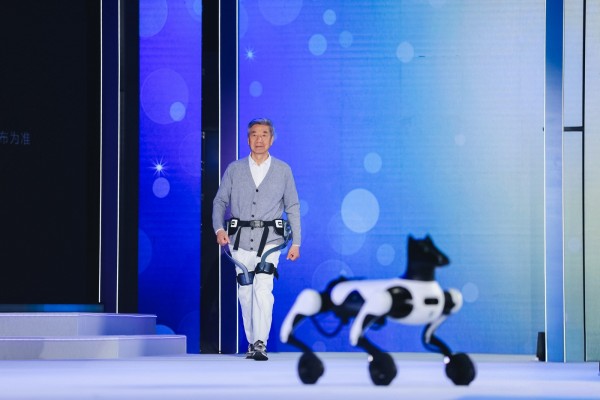
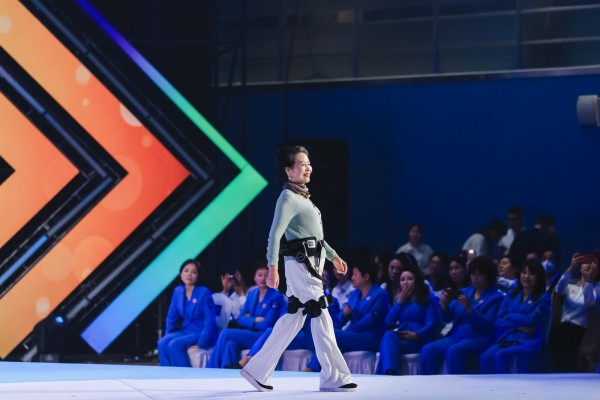
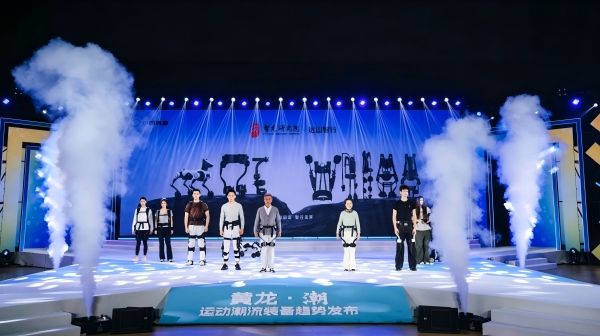
Models wear the AsExo-TK2000 exoskeleton for the show. [Photo/sasac.gov.cn]
The AsExo-TK1000 exoskeleton robot was recognized as one of the top 10 major technological achievements made by central State-owned enterprises in 2025. The AsExo-TK2000 is a comprehensively upgraded version and is built around a “human-cloud-home” fully interconnected architecture, which makes it more comfortable to wear, more intelligent and safer.
The new product is made of carbon fiber and weighs only 2.4 kilograms. It can help users reduce leg burden by 12 kg. Featuring biomimetic synchronized movement, it enables smoother starts and stops without abrupt jolts or dragging, reducing physical exertion by 35%. It can be put on within 30 seconds and can be folded into a backpack. It can identify gaits and terrains to switch between eight modes, including running and cycling. In addition, it can evolve with users’ habits and needs no manual adjustments.
When users tumble, it will pop an air bag within 0.1 seconds to protect their hips and torsos. It can automatically send positions and alerts to users’ families as incidents happen, such as falls or prolonged inactivity. It can also share movement data, thereby alleviating the anxiety caused by long-distance care. The product has passed extreme-environment testing ranging from minus 20 degrees Celsius to 60 degrees Celsius as well as that for 10,000 hours of operation.

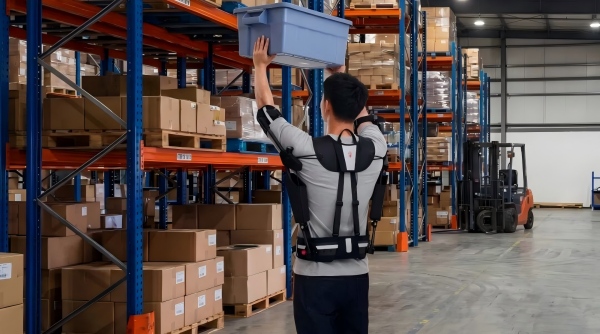
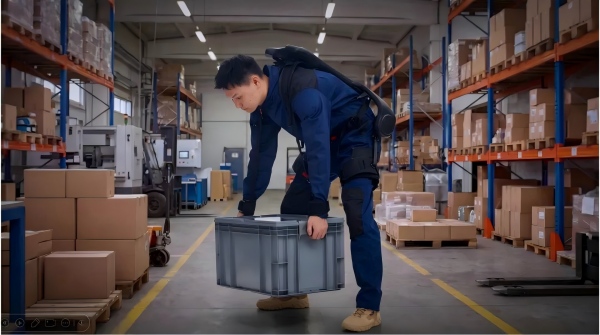
Different exoskeleton robots are used in people’s daily lives and industrial scenarios. [Photo/sasac.gov.cn]
The subsidiary brand features a consumer lifestyle ecosystem focused on elderly care, sports, and daily mobility, and an industrial-specialized ecosystem targeting logistics, manufacturing, and emergency rescue. The AsExo-TK1000 and AsExo-TK2000, both in the consumer lifestyle ecosystem, have been deployed at hundreds of experience sites in more than 50 cities. Other types of exoskeleton robots for industrial scenarios have been in trial use in multiple logistics centers and vehicle component factories and have been reported to increase handling efficiency by 30 percent.
(Executive editor: Zuo Shihan)