The world’s largest clean energy corridor operated well in the first quarter of 2026, ensuring a stable water supply, smooth navigation, energy security and ecological preservation along the Yangtze River.
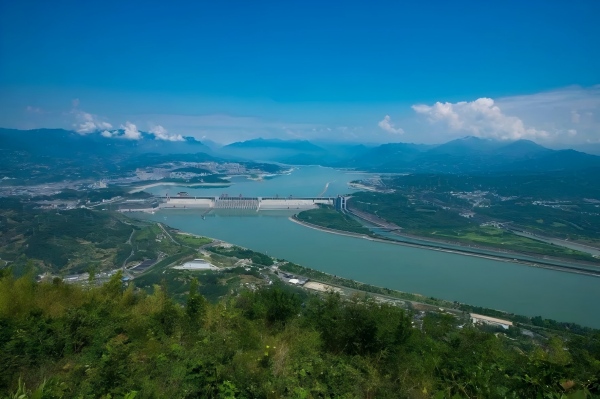
A panorama of the Three Gorges Project. [Photo/sasac.gov.cn]
Reasonable Water Distribution
Dynamic strategies regarding water inflow, power load and demand, and downstream water needs were adopted to distribute water resources. By the end of the first quarter, the reservoirs had released during the dry season over 20.3 billion cubic meters of water downstream, which is roughly 163 times the volume of East Lake in Wuhan, Central China’s Hubei Province.
Safe and Efficient Navigation
While ensuring water supply for production and people’s daily life along the river, the corridor improved the downstream navigation conditions, thereby increasing transport efficiency on the Yangtze River as a “golden waterway”.
In the first quarter, the Three Gorges ship locks safely operated 2,259 times, handling the passage of 35.47 million metric tons of cargo. The Three Gorges ship lift, a fast transit channel for the dam, was put into operation 869 times, aiding the transport of over 100,000 passengers and 875 vessels, with a cargo throughput of 430,000 tons.
Reliable Power Supply
The corridor increased power generation during peak times by coordinating maintenance plans and optimizing power plant operations. In the first quarter, the world’s largest clean energy corridor generated over 61.8 billion kilowatt-hours of electricity, a 7.19 percent increase over the previous year.
Orderly Ecological Trials
By closely monitoring the changes in electricity load and demand, the corridor was able to conduct the experimental ecological dispatches at the right times. The Wudongde and Baihetan hydropower stations carried out three trials specially for the fish species with adhesive and demersal eggs. In these trials, researchers adjusted the water flow and temperature to create better conditions for fish reproduction in the Yangtze River.
This world’s largest clean energy corridor, 1,800 kilometers long and with a total installed capacity of 71,695 megawatts, has six large hydropower stations -- the Wudongde, Baihetan, Xiluodu, Xiangjiaba, Three Gorges, and Gezhouba – built and operated by the China Three Gorges Corp. They can generate about 300 billion kWh of clean electricity annually, which can save nearly 90.45 million tons of standard coal and reduce carbon dioxide emissions by around 248 million tons.
(Executive editor: Zuo Shihan)