The 200-megawatt/400-megawatt-hour independent shared energy storage power station in Xuwen County, Zhanjiang City of Guangdong Province, was connected to the grid on March 14.
The power station, constructed by Guangdong Electric Power Design Institute Co., Ltd., a subsidiary of China Energy Engineering Group Co., Ltd., is Guangdong’s first independent energy storage project connected to a large-scale offshore wind power grid.
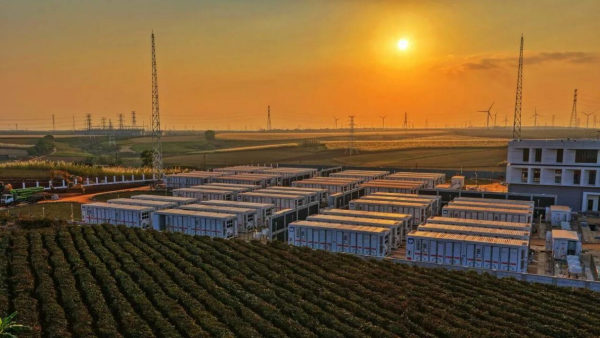
The 200-megawatt/400-megawatt-hour independent shared energy storage power station in Xuwen County, Zhanjiang City of Guangdong Province. [Photo/sasac.gov.cn]
The power station uses advanced grid-forming technologies and an all-liquid-cooled lithium iron phosphate energy storage system to enable its fast response within milliseconds and ensure high-level safety. This enhances the grid’s consumption and adjustment capability for new energy such as offshore wind power.
The power station can promote the consumption of new energy, conduct peak shaving and frequency regulation and respond to emergencies, thereby promoting the integration of wind and solar power and energy storage, and the building of zero-carbon port industries.
The power station is equipped with low-noise devices. It employs a range of independently developed technologies to ensure a high operational efficiency for the whole system.
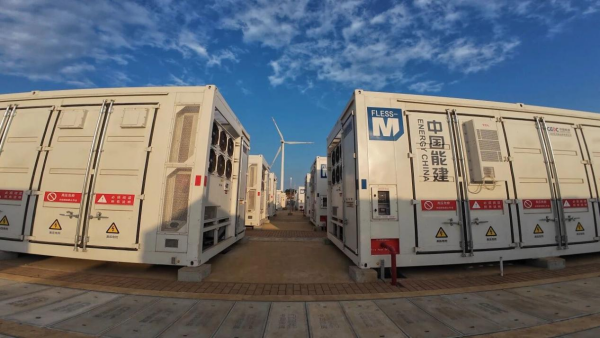
The devices of the 200-megawatt/400-megawatt-hour independent shared energy storage power station. [Photo/sasac.gov.cn]
Upon operation, the power station will provide 240 million kilowatt-hours of clean electricity annually, thereby meeting the needs of more than 60,000 households if each of them uses an average of 10 kWh of electricity per day. It can reduce standard coal usage by more than 70,000 metric tons and cut nearly 200,000 tons of carbon dioxide emissions. Its carbon sequestration effect is equal to planting 1.11 million trees.
The power station will continue to contribute to the local development, thereby upgrading regional industries, improving people’s livelihoods and protecting the ecological environment.
(Executive editor: Zuo Shihan)