On January 20, Dongfang Electric Corporation (DEC) began the shipment, from its manufacturing plant in Deyang City, Sichuan province, of the 100-megawatt tower-type turbine unit for the solar thermal power station in Anduo County, Xizang Autonomous Region.
Developed independently by DEC, the turbine unit is the highest-altitude of its type in China, marking a significant advancement in the country's capability to develop and manufacture large-scale solar thermal power equipment for high-altitude and extreme environments.
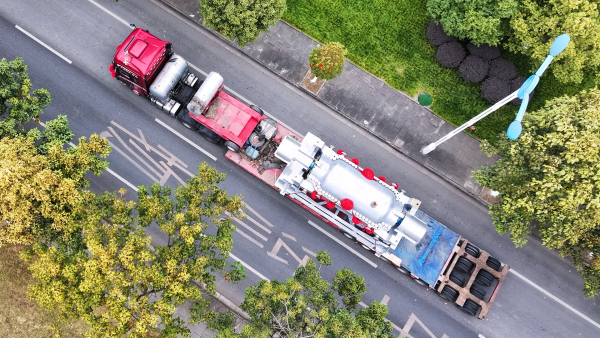
The 100-megawatt tower-type turbine unit for the solar thermal power station in Anduo County, Xizang Autonomous Region is loaded on truck for shipping. [Photo/sasac.gov.cn]
Located in the Tanggula Mountains at an elevation of 4,650 meters, the power station sets a new benchmark for high-altitude clean energy development in China. It has made several groundbreaking achievements. It is the world’s first tower-type solar thermal power plant in such a high-altitude and grid-remote area. It is the world’s highest-altitude solar thermal power station, and the autonomous region’s first tower-type solar thermal power plant.
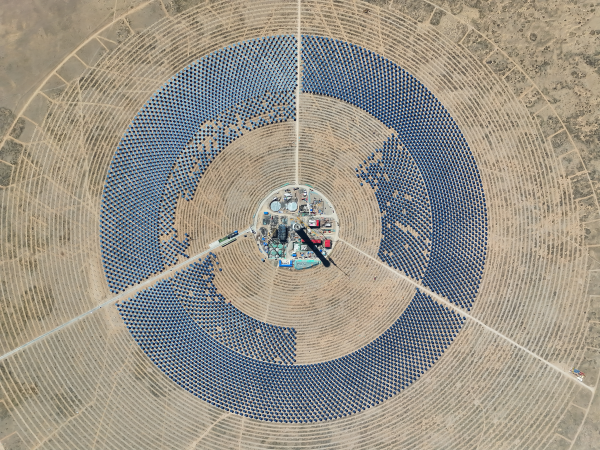
A bird’s eye view of the solar thermal power station in Anduo County, Xizang Autonomous Region. [Photo/sasac.gov.cn]
To date, DEC has delivered key equipment such as steam generators and the turbine unit for the project and produced more than 12,000 heliostats. The high-performance polyurethane potting compound used in the project was fully developed by DEC. Specifically formulated for plateau operating conditions, it exhibits high-strength and high-toughness bonding performance, ensuring long-term reliability of the equipment and achieving domestic substitution.
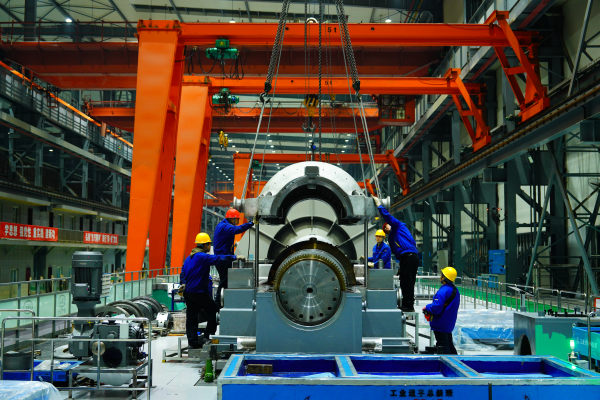
Workers assemble the 100-megawatt tower-type turbine unit at a manufacturing plant. [Photo/sasac.gov.cn]
Upon completion, the project is expected to churn out 260 million kilowatt-hours of electricity annually, saving about 60,000 tons of standard coal equivalent and reducing carbon dioxide emissions by about 165,000 tons.
(Executive editor: Yuan Ting)