During the 14th Five-Year Plan (2021–25) period, China Energy Engineering Group Co., Ltd (Energy China) has navigated energy revolution by thoroughly implementing the innovation-driven development strategy, achieving a series of breakthroughs. Energy China has written a brilliant and vivid chapter in the magnificent landscape of China’s energy and power development, illuminating a shared path toward progress and a more sustainable future for humanity.
An array of technological achievements
In Yingcheng, Hubei Province, Nengchu-1, the world’s first 300-megawatt compressed air energy storage (CAES) station, serves as a power bank. It converts excess electricity into high-pressure air, stores it in underground salt caverns and drives generators with it to produce electricity during peak hours.
"This project not only demonstrates the feasibility of CAES technology, but also lays a solid foundation for the technology’s large-scale commercial application in the future," said Yang Chunhe, a Chinese Academy of Engineering (CAE) academician, adding that CAES will become one of the key technologies for the regulation and storage of large-scale renewable energy.
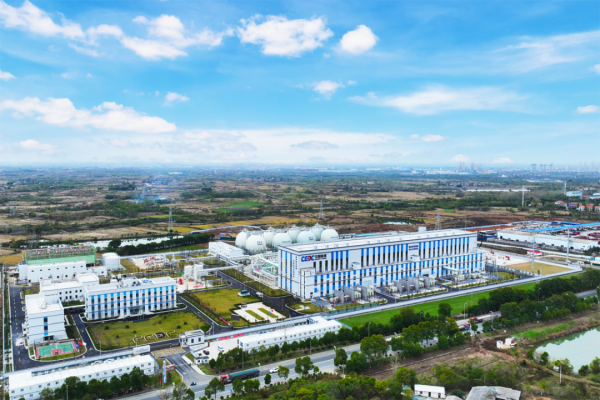
A view of Nengchu-1, the world’s first 300-megawatt CAES power station [Photo/sasac.gov.cn]
Meanwhile, in Jiuquan, Gansu Province, the world’s first 300-megawatt artificial cavern CAES power plant is ready for operation. Following the Yingcheng project, it stands as another testament to the significant achievements of Energy China in technological innovation.
Over the past five years, Energy China has fostered a vibrant culture of innovation, producing a wealth of practical and high-quality outcomes. The innovation and development of core technologies, like the backpressure extraction steam turbine (BEST) and steam-electric dual-drive system, have propelled China’s ultra-supercritical double-reheat technology to a world-leading level. Breakthroughs in key technologies for high-voltage, high-capacity flexible HVDC transmission have made power delivery more flexible and efficient. The integrated green hydrogen-ammonia-methanol solution has been implemented, outlining a vision for a net-zero emissions future. Energy China led the compilation and release of the first IEC international standard for solar thermal power, setting global benchmarks with Chinese technology. It also developed the world’s first 100-ton flue gas carbon capture unit, opening a new pathway for carbon reduction. Meanwhile, the invention of the digitalized and lean installation technology for million-kilowatt hydro turbine units has further consolidated China’s leading position in global hydropower capacity.
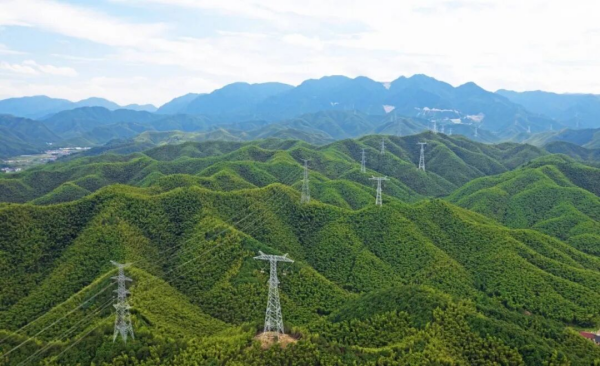
The Baihetan-Zhejiang ±800-kilovolt ultra-high voltage direct current power transmission project [Photo/sasac.gov.cn]
In recent years, leveraging its mastery of planning and design technologies for new power systems centered on new energy, Energy China has promoted the construction of 12 large-scale new energy base projects in desert, Gobi and wasteland areas such as Kubuqi Desert, and it has included 22 cross-provincial and cross-regional UHVDC transmission corridors in national plans.
Innovation ecosystem nurtures sci-tech advancement
From 2021 to 2024, Energy China focused on key areas including new power systems, renewable energy generation, far-reaching offshore wind power, new energy storage, green hydrogen production and carbon capture, utilization and storage. It intensified efforts to tackle critical challenges in these areas, with an average annual growth of 16 percent in R&D investment. Its R&D investment reached 14.56 billion yuan in 2024, with the R&D intensity reaching 3.35 percent. These substantial investments have provided a solid foundation for scientific and technological innovation.
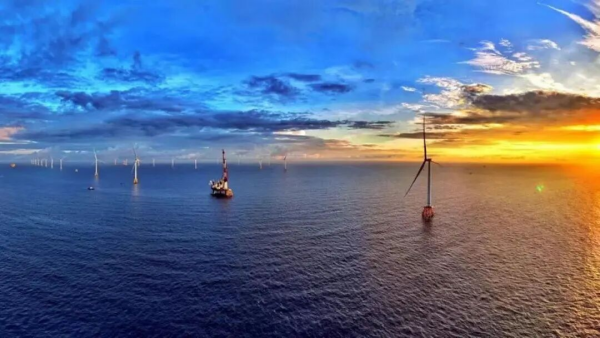
The Qingzhou No 1 and No 2 offshore wind power projects operate in Guangdong Province [Photo/sasac.gov.cn]
Collaborative innovation brings together strength from various sectors
In recent years, SASAC has organized central state-owned enterprises to establish several innovation unions. Energy China has participated in six innovation unions of new-type energy storage, advanced power equipment, CCUS, BIM software, deep underground space and controlled nuclear fusion. It has taken the lead in undertaking seven key research projects in the unions, injecting strong momentum into the country’s high-quality development.
Energy China has always placed great emphasis on intensive collaboration with research institutes and higher education institutions. It has forged regular, long-term partnerships with over 300 scientific research organizations, achieving substantial results.
In 2022, Energy China took the lead in jointly establishing the China Energy Storage Industry Innovation Alliance with 63 leading enterprises, universities and research institutes. The alliance focuses on pooling concerted efforts among national policy, industry development, industrial chain, technology, and the market to promote the integrated development of the innovation chain, industrial chain, capital chain and talent chain.
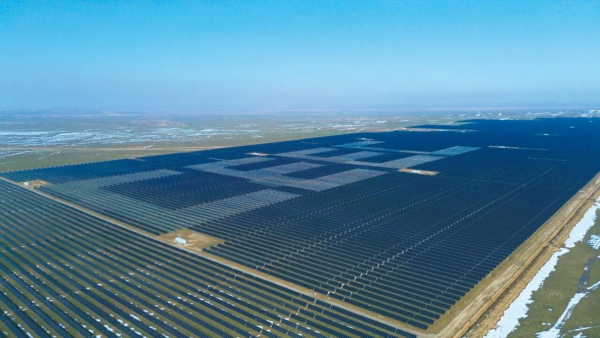
Uzbekistan’s 1 GW PV project commissioned by Energy China [Photo/sasac.gov.cn]
Energy China has been expanding its international sci-tech cooperation from Europe to ASEAN, and from Central Asia to Africa. The company has established various sci-tech innovation centers and institutions. In 2024, Silk Road Energy Planning and Engineering, a joint venture established by Energy China and Uzbekistan Energy Engineering, became China’s first overseas energy planning research institution.
In August, during his visit to China for the 2025 Shanghai Cooperation Organization Summit, Egyptian Prime Minister Mostafa Madbouly remarked that Energy China had won the full trust of all stakeholders in Egypt with its professional competence and efficient contract performance, establishing itself as a reliable partner. He further expressed his hope for Energy China to provide enhanced support for Egypt’s power grid planning.
(Executive editor: Yuan Ting)