
Home > Calendar
Electricity Produced in Tibet Contributes to Clean Energy Development in Other Regions for the First Time on June 1, 2015
Updated: 2020-06-01
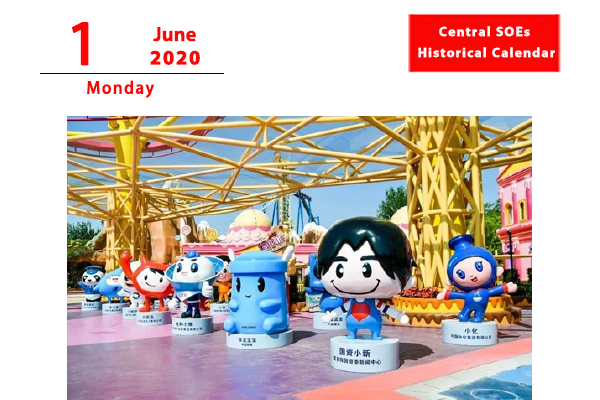
SOE Cartoon Tribe - China's first new media cartoon sculpture tribe - was revealed to the public in Happy Valley in Beijing on June 1, 2018. [Photo/sasac.gov.cn]
Electricity produced in Tibet contributes to clean energy development in other regions for the first time on June 1, 2015
Power produced in the Tibet autonomous region was transferred to Qinghai province on June 1, 2015, contributing to clean energy development and showing that Tibet has started to participate in balancing the northwestern regions' power supply and optimizing the national energy structure.
The power line is operated by the Tibet Division of the State Grid Corporation of China. As much as 100,000 kilowatts of power can be transferred at once and the average volume of transferred electricity is 1.81 million kWh per day.
Thanks to the State Grid's Qinghai-Tibet power line connection project, Tibet's electricity structure has been adjusted and its clean energy development accelerated.
Tibet is a main strategic resource storage base and a key energy pivot in China. The land holds an annual water resources quantity of about 448.2 billion cubic meters and ranks top in theoretical and exploitable hydropower resources in the country.
SOE Cartoon Tribe - China's first new media cartoon sculpture tribe - goes public on June 1, 2018
SOE Cartoon Tribe - China's first new media cartoon sculpture tribe - was revealed to the public in Happy Valley in Beijing on June 1, 2018.
The sculptures are new media images for many SOEs including China Huadian Corporation LTD., Power Construction Corporation of China, China Electronic Technology Group Corporation, China Resources (Holdings) Co., Ltd., China State Construction Engineering Corporation, China Petrochemical Corporation, China Southern Power Grid, China National Nuclear Power Co., Ltd, China National Building Materials Group Corporation, China COSCO SHIPPING Group, Sinochem Group Co., Ltd. and China Railway Construction Corporation Limited.
The three-dimensional images show that the Chinese central SOEs are strengthening brand awareness, improving cultural connotations and shouldering more social responsibilities to get close to the public.
(Executive editor: Li Shuling)

Copyright © State-owned Assets Supervision and Administration Commission of the State Council
All rights reserved. Presented by China Daily